Recombinant Human LILRA5 (C-6His)
PHH1086-10ug · 10ug
Verified Partner
Sign in to see pricing and request a quote.
Brand Store Product
No external links. Get your quote directly here.
Description
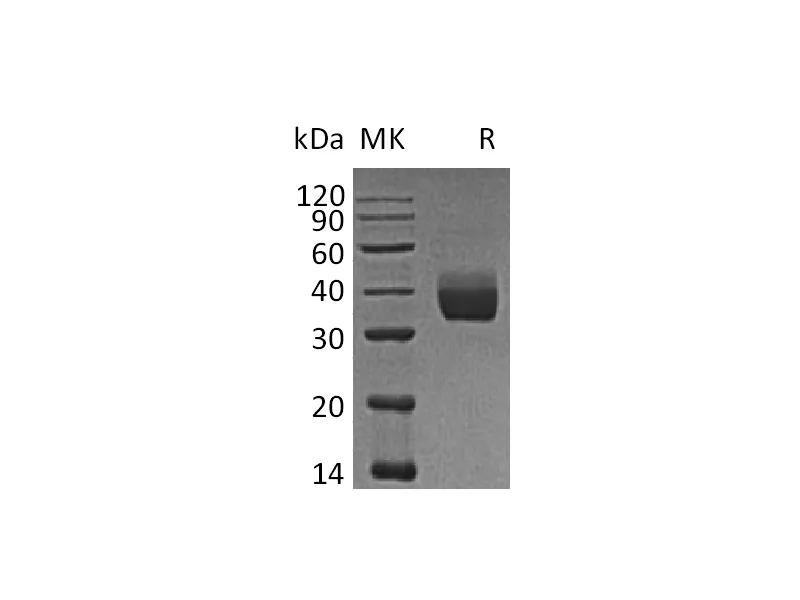
EnkiLife provides the Recombinant Human LILRA5 (C-6His) protein,aslo know as Leukocyte immunoglobulin-like receptor subfamily A member 5,CD85 antigen-like family member F,Immunoglobulin-like transcript 11,ILT-11,Leukocyte immunoglobulin-like receptor 9,LIR-9,CD85f,LILRA5,LILRB7, which features high purity, high activity, and high stability. It can be applied in scientific research, biopharmaceuticals, and other fields.Purity:Greater than 95% as determined by reducing SDS-PAGE;Endotoxin Level:<1 EU/µg as determined by LAL test.;Construction:Recombinant Human Leukocyte Immunoglobulin-like Receptor Subfamily A Member 5 is produced by our Mammalian expression system and the target gene encoding Gly42-Arg268 is expressed with a 6His tag at the C-terminus.Accession:A6NI73. Expression Host:Human Cells.Species:Human.Predicted Molecular Mass:26.1 KDa. Background:Leukocyte Immunoglobulin-like Receptor Subfamily A Member 5(LILRA5)is a member of the leukocyte immunoglobulin-like receptors (LILR), comprise a family of activating and inhibitory type immunoreceptors. LILRA5 consists of a 227 amino acid (aa) extracellular domain (ECD), a 21 aa transmembrane segment, and a 10 aa cytoplasmic tail. The ECD contains two Ig-like domains and the transmembrane segment contains a positively charged aspartic acid residue which may mediate its association with the signaling molecule, FcR common gamma chain. LILRA5 is expressed by monocytes, macrophages, and neutrophils. Cross-linking of LILRA5 on monocytes induces the expression of pro-inflammatory cytokines (IL-1beta, IL-6, TNF-alpha) as well as the anti-inflammatory IL-10. It can be detected in tissues of the hematopoietic system, including bone marrow, spleen, lymph node and peripheral leukocytes. Crosslink of ILT-11 on the surface of monocytes has been shown to induce calcium flux and secretion of several proinflammatory cytokines, which suggests the roles of this protein in triggering innate immune responses.
More from EnkiLife