Recombinant Human NKG2DL (C-6His)
PHH1231-10ug · 10ug
Verified Partner
Sign in to see pricing and request a quote.
Brand Store Product
No external links. Get your quote directly here.

Description
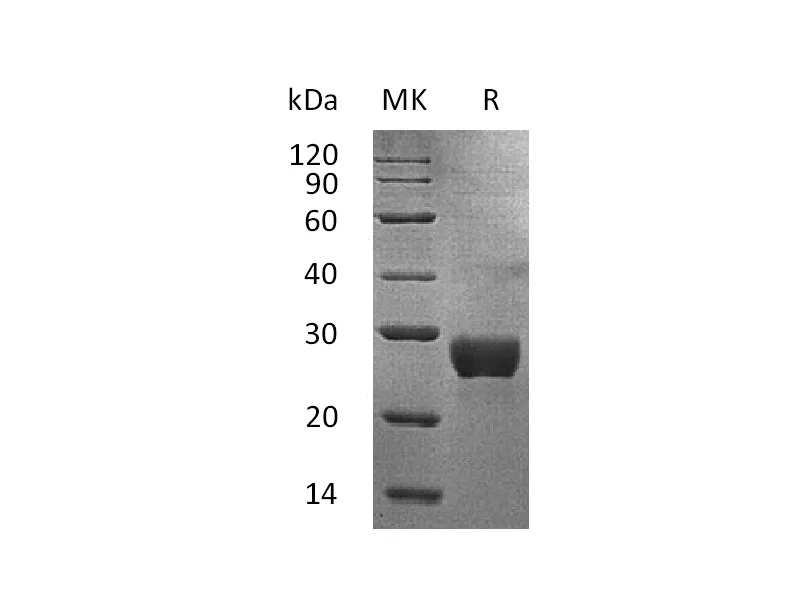
EnkiLife provides the Recombinant Human NKG2DL (C-6His) protein,aslo know as NKG2D ligand 1,N2DL-1,NKG2DL1,ALCAN-beta,Retinoic acid early transcript 1I,UL16-binding protein 1,ULBP1, which features high purity, high activity, and high stability. It can be applied in scientific research, biopharmaceuticals, and other fields.Purity:Greater than 95% as determined by reducing SDS-PAGE;Endotoxin Level:<1 EU/µg as determined by LAL test.;Construction:Recombinant Human UL16 Binding Protein-1/NKG2D Ligand 1 is produced by our Mammalian expression system and the target gene encoding Gly26-Pro215 is expressed with a 6His tag at the C-terminus.Accession:Q9BZM6. Expression Host:Human Cells.Species:Human.Predicted Molecular Mass:23.3 KDa. Background:ULBP1, also known as RAET1I and NKG2DL1, is a member of the ULBP/RAET1 gene family. ULBP1 plays an important role in immune responses, especially in cancer and infectious diseases, and is well-known to bind to NKG2D together with at least ULBP 2 and 3. These proteins are distantly related to major histocompatibility class I (MHC I) molecules, possessing the alpha 1 and alpha 2 Ig-like domains, but lacking the alpha 3 domain. Unlike MHC Class I, they have no capacity to bind peptide or interact with beta2-microglobulin. It can activate multiple signaling pathways in primary NK cells, gamma delta T cells, and CD8+ alpha beta T cells, resulting in the production of cytokines and chemokines.ULBP1 is expressed in wide range of tissues including heart, brain, lung, liver, bone marrow and some tumor cells, T-cells, B-cells, As an unconventional member of the MHC class I family, ULBP1 is able to interact with soluble CMV glycoprotein UL16 in CMV infected cells. The interaction with UL16 blocked the interaction with the NKG2D receptor, and thus might escape the immune surveillance. Furthermore, UL16 also causes ULBP1 to be retained in the ER and cis-Golgi apparatus so that it does not reach the cell surface. The ULBP1 regulation may have implications for development of new therapeutic strategies against cancer cells.
More from EnkiLife