Recombinant Human Siglec-10 (C-mFc)
PHH2148-10ug · 10ug
Verified Partner
Sign in to see pricing and request a quote.
Brand Store Product
No external links. Get your quote directly here.

Description
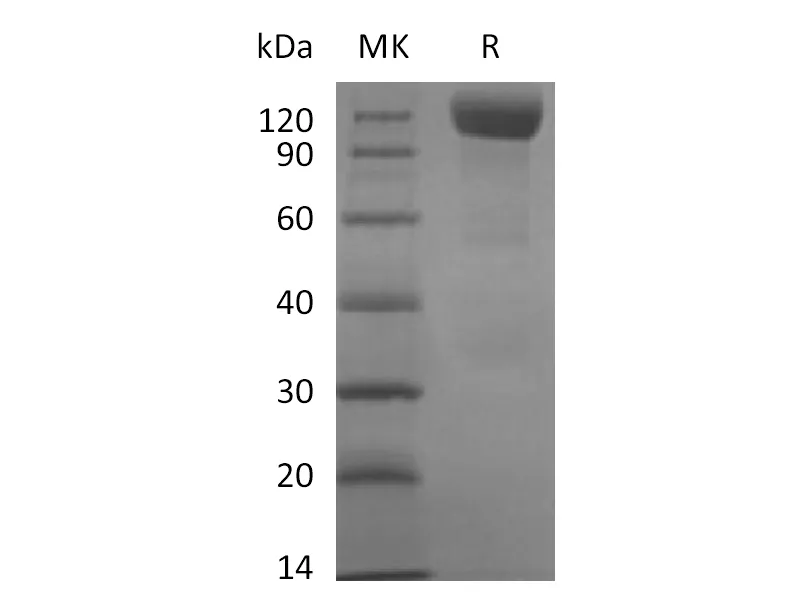
EnkiLife provides the Recombinant Human Siglec-10 (C-mFc) protein,aslo know as SIGLEC10,MGC126774,PRO940,Siglec10,SLG2,sialic acid-binding Ig-like lectin 10,Siglec-10,siglec-like gene 2,Siglec-like protein 2,SLG2sialic acid binding Ig-like lectin 10 Ig-like lectin 7, which features high purity, high activity, and high stability. It can be applied in scientific research, biopharmaceuticals, and other fields.Purity:Greater than 95% as determined by reducing SDS-PAGE;Endotoxin Level:<1 EU/µg as determined by LAL test.;Construction:Recombinant Human Sialic Acid-binding Ig-like Lectin 10 is produced by our Mammalian expression system and the target gene encoding Met17/xadThr546 is expressed with a mouse IgG1 Fc tag at the C-terminus.Accession:Q96LC7. Expression Host:Human Cells.Species:Human.Predicted Molecular Mass:84.6 KDa. Background:Siglecs (sialic acid binding Ig-like lectins) are I-type lectins that belong to the immunoglobulin superfamily. They are characterized by an N-terminal Ig-like V-type domain which mediates sialic acid binding, followed by a varying number of Ig-like C2-type domains. Siglecs 5-11 constitute the CD33/Siglec-3 related group, and are differentially expressed in the hematopoietic system. Siglec-G is the apparent ortholog of human Siglec-10. We describe here a novel member of the siglec protein family that shares a similar structure including five Ig-like domains, a transmembrane domain, and a cytoplasmic tail containing two ITIM-signaling motifs. Siglec-10 was identified through database mining of an asthmatic eosinophil EST library. Siglec-10 binds sialated proteins and lipids in alpha 2,3 or alpha 2,6 linkage and shows a preference for GT1b gangliosides. This binding can be modulated by cis interactions of Siglec-10 with sialated molecules expressed on the same cell. When tyrosine phosphorylated, the cytoplasmic ITIMs interact with phosphatases SHP-1 and SHP-2 to propagate inhibitory signals. The Siglec-10-VAP-1 interaction seems to mediate lymphocyte adhesion to endothelium and has the potential to modify the inflammatory microenvironment via the enzymatic end products.
More from EnkiLife