Recombinant Human TNF-α
PCH2540-10ug · 10ug
Verified Partner
Sign in to see pricing and request a quote.
Brand Store Product
No external links. Get your quote directly here.

Description
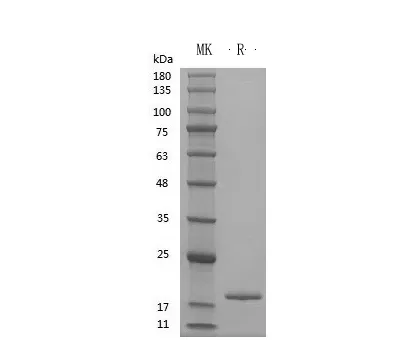
EnkiLife provides the Recombinant Human TNF-α protein,aslo know as umor Necrosis Factor, Cachectin, TNF-Alpha, Tumor Necrosis Factor Ligand Superfamily Member 2, TNF-a, TNF, TNFA, TNFSF2, which features high purity, high activity, and high stability. It can be applied in scientific research, biopharmaceuticals, and other fields.Purity:Greater than 95% as determined by reducing SDS-PAGE;Endotoxin Level:≤10 EU/mg;Construction:Recombinant Human TNF-α is produced by our Mammalian cell expression system and the target gene encoding Val77-Leu233 is expressed.Accession:P01375. Expression Host:Human Cells.Species:Human.Predicted Molecular Mass:17.4 kDa. Background:Tumor Necrosis Factor-α (TNF-α) is secreted by macrophages, monocytes, neutrophils, T-cells, and NK-cells following stimulation by bacterial LPS. Cells expressing CD4 secrete TNF-α while cells that express CD8 secrete little or no TNF-α. Synthesis of TNF-α can be induced by many different stimuli including interferons, IL2, and GM-CSF. The clinical use of the potent anti-tumor activity of TNF-α has been limited by the proinflammatory side effects such as fever, dose-limiting hypotension, hepatotoxicity, intravascular thrombosis, and hemorrhage. Designing clinically applicable TNF-α mutants with low systemic toxicity has been of intense pharmacological interest. Human TNF-α that binds to murine TNF-R55 but not murine TNF-R7, exhibits retained anti-tumor activity and reduced systemic toxicity in mice compared with murine TNF-α, which binds to both murine TNF receptors. Based on these results, many TNF-α mutants that selectively bind to TNF-R55 have been designed. These mutants displayed cytotoxic activities on tumor cell lines in vitro and have exhibited lower systemic toxicity in vivo. Recombinant Human TNF-α High Active Mutant differs from the wild-type by amino acid subsitution of amino acids 1-7 with Arg8, Lys9, Arg10 and Phe157. This mutant form has been shown to have increased activity with less inflammatory side effects in vivo.
More from EnkiLife