Recombinant Mouse CADM1 (C-6His)
PHM2020-50ug · 50ug
Verified Partner
Sign in to see pricing and request a quote.
Brand Store Product
No external links. Get your quote directly here.

Description
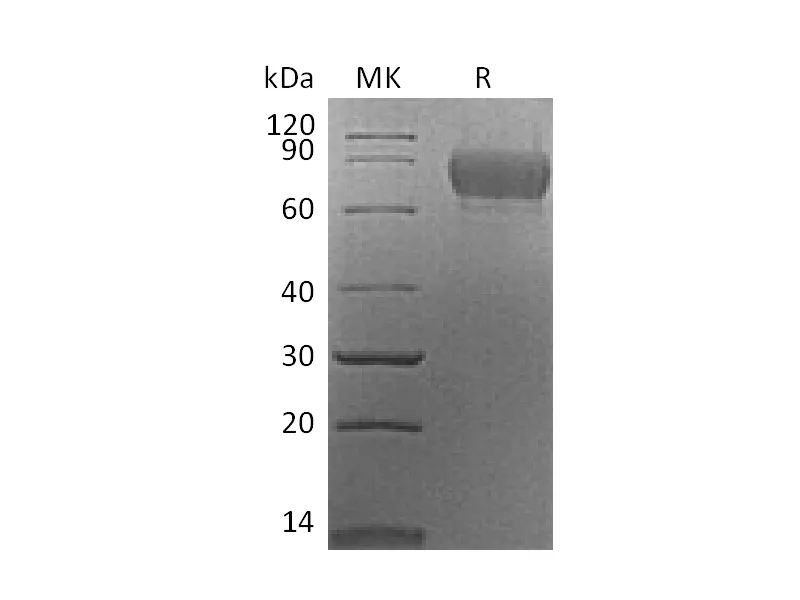
EnkiLife provides the Recombinant Mouse CADM1 (C-6His) protein,aslo know as Cell adhesion molecule 1;Immunoglobulin superfamily member 4;IgSF4;Nectin-like protein 2;NECL-2;Synaptic cell adhesion molecule;SynCAM;Tumor suppressor in lung cancer 1;TSLC-1, which features high purity, high activity, and high stability. It can be applied in scientific research, biopharmaceuticals, and other fields.Purity:Greater than 95% as determined by reducing SDS-PAGE;Endotoxin Level:<1 EU/µg as determined by LAL test.;Construction:Recombinant Mouse Cell Adhesion Molecule 1 is produced by our Mammalian expression system and the target gene encoding Gln48-His388 is expressed with a 6His tag at the C-terminus.Accession:Q8R5M8. Expression Host:Human Cells.Species:Mouse.Predicted Molecular Mass:39.2 KDa. Background:Cell adhesion molecule 1(CADM1) is a single-pass type I membrane protein and belongs to the nectin family. It contains 2 Ig-like C2-type (immunoglobulin-like) domains and 1 Ig-like V-type (immunoglobulin-like) domain. CADM1 acts as a tumor suppressor in non-small-cell lung cancer (NSCLC) cells. Interaction with CRTAM promotes natural killer (NK) cell cytotoxicity and interferon-gamma (IFN-gamma) secretion by CD8+ cells in vitro as well as NK cell-mediated rejection of tumors expressing CADM3 in vivo. CADM1 may contribute to the less invasive phenotypes of lepidic growth tumor cells. In mast cells, it may mediate attachment to and promote communication with nerves. CADM1, together with MITF, is essential for development and survival of mast cells in vivo. The protein acts as a synaptic cell adhesion molecule and plays a role in the formation of dendritic spines and in synapse assembly. It may be involved in neuronal migration, axon growth, pathfinding, and fasciculation on the axons of differentiating neurons. CADM1 may play diverse roles in the spermatogenesis including in the adhesion of spermatocytes and spermatids to Sertoli cells and for their normal differentiation into mature spermatozoa.
More from EnkiLife