Recombinant Mouse CD74 (C-6His)
PHM0795-10ug · 10ug
Verified Partner
Sign in to see pricing and request a quote.
Brand Store Product
No external links. Get your quote directly here.

Description
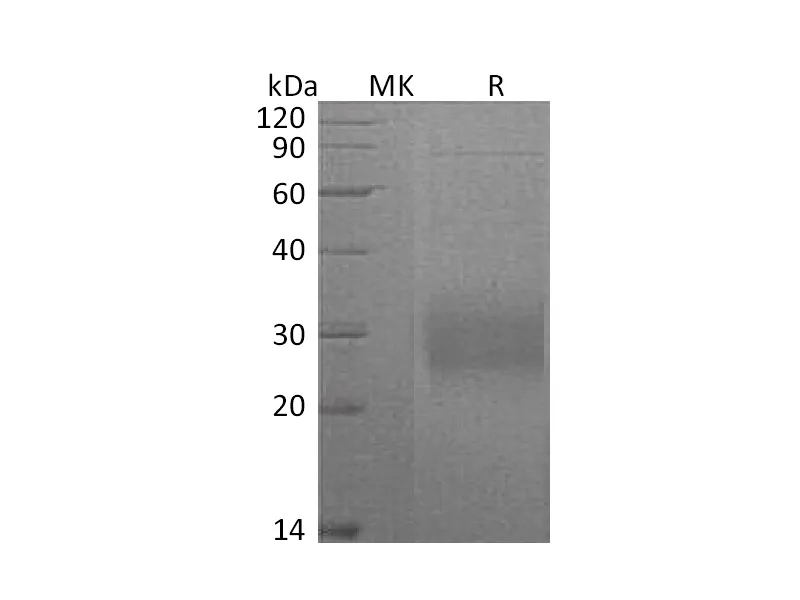
EnkiLife provides the Recombinant Mouse CD74 (C-6His) protein,aslo know as Cluster of Differentiation 74;CD74 antigen,CD74 molecule, major histocompatibility complex, class II invariant chain,DHLAG gamma chain of class II antigens,HLA class II histocompatibility antigen gamma chain,HLADG,HLA-DR antigens-associated invariant chain,HLA-DR-gamma,Ia antigen-associated invariant chain,Ia-associated invariant chain,Ia-GAMMA,MHC HLA-DR gamma chain,CD74,DHLAG,HLADG,Ia-gamma,INVG34;, which features high purity, high activity, and high stability. It can be applied in scientific research, biopharmaceuticals, and other fields.Purity:Greater than 95% as determined by reducing SDS-PAGE;Endotoxin Level:<1 EU/µg as determined by LAL test.;Construction:Recombinant Mouse HLA Class II Histocompatibility Antigen Gamma Chain is produced by our Mammalian expression system and the target gene encoding Gln56-Leu215 is expressed with a 6His tag at the C-terminus.Accession:P04441-2. Expression Host:Human Cells.Species:Mouse.Predicted Molecular Mass:19.4 KDa. Background:Mouse HLA class II histocompatibility antigen gamma chain (CD74), is a single-pass type II membrane glycoprotein which contains 1 thyroglobulin type-1 domain. Mouse CD74 shares 75% and 88% aa sequence identity with human and rat CD74, respectively. CD74 plays an important role in adaptive immunity, inflammation, and cancer. It plays a critical role in MHC class II antigen processing by stabilizing peptide-free class II alpha/beta heterodimers in a complex soon after their synthesis and directing transport of the complex from the endoplasmic reticulum to compartments where peptide loading of class II takes place.CD74 also associates with CD44 and binds with high affinity to the cytokine MIF, leading to inflammatory leukocyte responses, protection from tissue fibrosis, B cell proliferative and survival signaling, and the up‑regulation of angiogenic factors in endometrial stromal cells.
More from EnkiLife