Recombinant Mouse CHL2 (C-6His)
PHM0407-10ug · 10ug
Verified Partner
Sign in to see pricing and request a quote.
Brand Store Product
No external links. Get your quote directly here.

Description
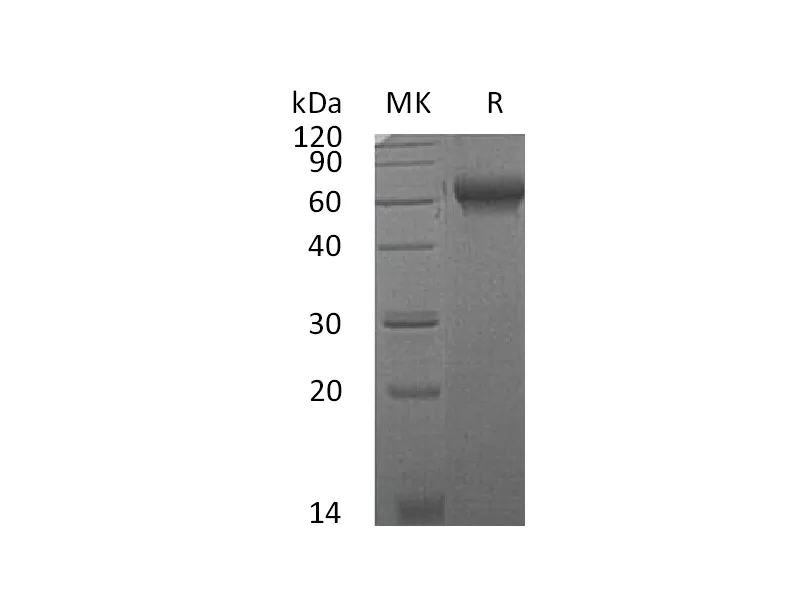
EnkiLife provides the Recombinant Mouse CHL2 (C-6His) protein,aslo know as Chordin-like protein 2,BNF-1,CHRDL2,chordin-like 2,chordin-like protein 2, which features high purity, high activity, and high stability. It can be applied in scientific research, biopharmaceuticals, and other fields.Purity:Greater than 95% as determined by reducing SDS-PAGE;Endotoxin Level:<1 EU/µg as determined by LAL test.;Construction:Recombinant Mouse Chordin-like Protein 2 is produced by our Mammalian expression system and the target gene encoding Gln24-Leu426 is expressed with a 6His tag at the C-terminus.Accession:AAH19399.1. Expression Host:Human Cells.Species:Mouse.Predicted Molecular Mass:46.2 KDa. Background:Mouse Chordin-Like 2, also known as CHL2, is a novel chordin family member with structural homology to CHL1 which is implicated in tumor angiogenesis. The mouse CHL2 gene encodes a 426 amino acids (aa) protein with a 25 aa signal peptide. The mature chain of CHL2 protein contains two potential N-linked glycosylation sites, one putative NLS and three 63 aa cysteine-rich von Willebrand type C repeats (CRs). CHL2 gene is weakly expressed in the liver and kidney, partly expressed in the connective tissues of reproductive organs such as ligaments of the ovary and oviduct in females, and of testis, epididymis and certain male accessory sex glands in males. Recombinant mCHL2 protein interacted directly with five BMPs and one GDF thereby inhibiting, in vitro, several BMP/GDF-dependent processes including, osteogenic differentiation of C2C12 mesenchymal progenitor cells by several BMPs, ATDC5 embryonal carcinoma cells by GDF5 and BMP4-dependent lymphohematopoietic (CD34+CD31hi and CD34+CD31lo) progenitor cell development from ES cells. CHL2 may inhibits BMPs activity by blocking their interaction with their receptors, and has a negative regulator effect on the cartilage formation/regeneration from immature mesenchymal cells, by preventing or reducing the rate of matrix accumulation. Also, it may play a role during myoblast and osteoblast differentiation, and maturation.
More from EnkiLife