Recombinant Mouse EDAR (C-Fc)
PHM0552-50ug · 50ug
Verified Partner
Sign in to see pricing and request a quote.
Brand Store Product
No external links. Get your quote directly here.
Description
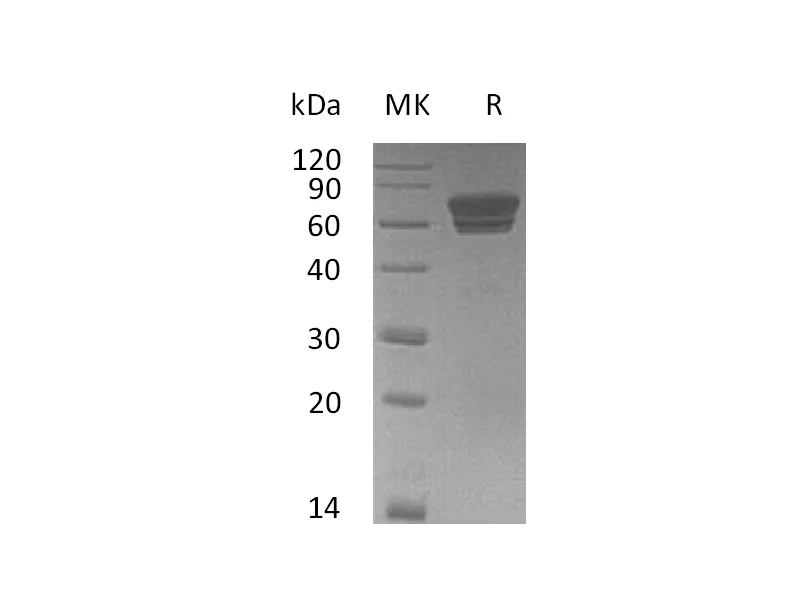
EnkiLife provides the Recombinant Mouse EDAR (C-Fc) protein,aslo know as Tumor necrosis factor receptor superfamily member EDAR,Anhidrotic ectodysplasin receptor 1,Downless,Ectodermal dysplasia receptor,Ectodysplasin-A receptor, which features high purity, high activity, and high stability. It can be applied in scientific research, biopharmaceuticals, and other fields.Purity:Greater than 95% as determined by reducing SDS-PAGE;Endotoxin Level:<1 EU/µg as determined by LAL test.;Construction:Recombinant Mouse Ectodysplasin Receptor is produced by our Mammalian expression system and the target gene encoding Glu27-Ile189 is expressed with a human IgG1 Fc tag at the C-terminus.Accession:Q9R187. Expression Host:Human Cells.Species:Mouse.Predicted Molecular Mass:44.7 KDa. Background:Ectodysplasin A receptor (EDAR) is a type I transmembrane protein of the TNF-α receptor superfamily which plays a key role in ectodermal differentiation. EDAR was encoded by the mouse downless gene and defective in human dominant and recessive forms of autosomal hypohidrotic ectodermal dysplasia (EDA) syndrome. The extracellular domain of EDAR contains 14 cysteine residues, six of which approximate the TNFRSF cysteine-rich region, the cytoplasmic domain contains a region with homology to the death domains found in other TNFRSF members. EDAR has been suggested to be an early and important promoter of placode development in all ectodermal organs, such as uch as hair follicles, teeth and sweat glands. EDA-A1, the A1 isoform of EDA, is the EDAR ligand. EDA and EDA are implicated in appendage development by the cloning of a gene underlying hypohidrotic ectodermal dysplasia (HED) in mouse and human. HED is characterized by agenesis or malformation of ectoderm-derived appendages, such as teeth, sweat glands and hair follicles, while the skin itself develops normally.
More from EnkiLife