Recombinant Mouse LAMP-1 (C-6His)
PHM1119-50ug · 50ug
Verified Partner
Sign in to see pricing and request a quote.
Brand Store Product
No external links. Get your quote directly here.

Description
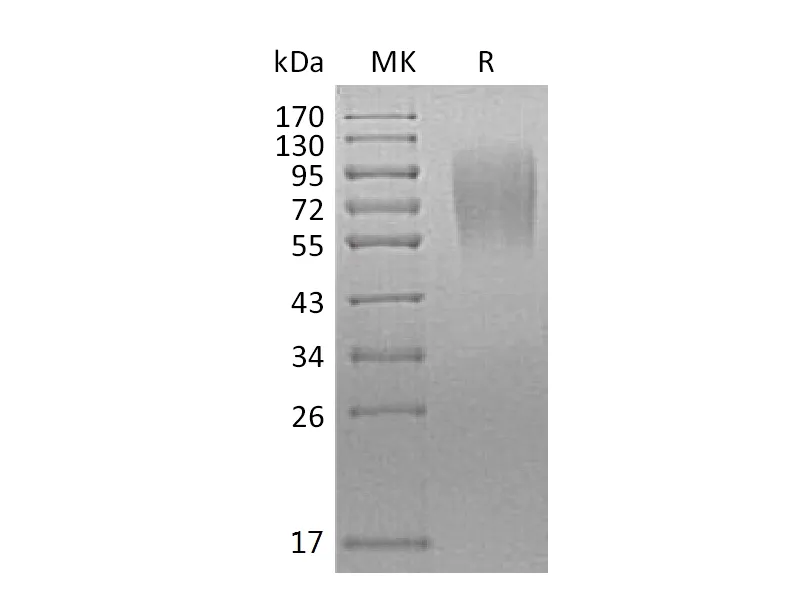
EnkiLife provides the Recombinant Mouse LAMP-1 (C-6His) protein,aslo know as Lysosome-associated membrane glycoprotein 1,LAMP-1,Lysosome-associated membrane protein 1,120 kDa lysosomal membrane glycoprotein,CD107 antigen-like family member A,LGP-120,Lysosomal membrane glycoprotein A,LGP-A,P2B,CD107a, which features high purity, high activity, and high stability. It can be applied in scientific research, biopharmaceuticals, and other fields.Purity:Greater than 95% as determined by reducing SDS-PAGE;Endotoxin Level:<1 EU/µg as determined by LAL test.;Construction:Recombinant Mouse Lysosome-associated Membrane Glycoprotein 1 is produced by our Mammalian expression system and the target gene encoding Leu25-Asn370 is expressed with a 6His tag at the C-terminus.Accession:P11438. Expression Host:Human Cells.Species:Mouse.Predicted Molecular Mass:38.6 KDa. Background:Lysosomal associated membrane protein 1 (LAMP1) is an approximately 120 kDa transmembrane glycoprotein that is a major protein component of lysosomal membranes. Mature mouse LAMP1 consists of a 346 amino acid (aa) intralumenal domain (ECD), a 24 aa transmembrane segment, and a 12 aa cytoplasmic tail. Its lumenal domain is organized into two heavily N-glycosylated regions separated by a Ser/Pro-rich linker that carries a minor amount of O-linked glycosylation. Within the lumenal domain, mouse LAMP1 shares approximately 64% and 82% aa sequence identity with human and rat LAMP1, respectively. The sorting of LAMP1 to lysosomes relies on a tyrosine motif in the cytoplasmic tail. In cytotoxic T cells and mast cells, LAMP1 is expressed in the membranes of intracellular granules that contain effector molecules such as perforin, granzymes, eicosanoids, and histamine. A glycoform of LAMP1 known as M150 is expressed on the surface of activated macrophages where it promotes T cell co-stimulation and a Th1 biased immune response. Exposure of epithelial cells to pathogenic Neisseria bacteria induces the redistribution of LAMP1 to the cell surface where it can be cleaved by the Neisseria IgA1 protease.
More from EnkiLife