Recombinant Mouse LIMPII (C-6His)
PHM1463-50ug · 50ug
Verified Partner
Sign in to see pricing and request a quote.
Brand Store Product
No external links. Get your quote directly here.

Description
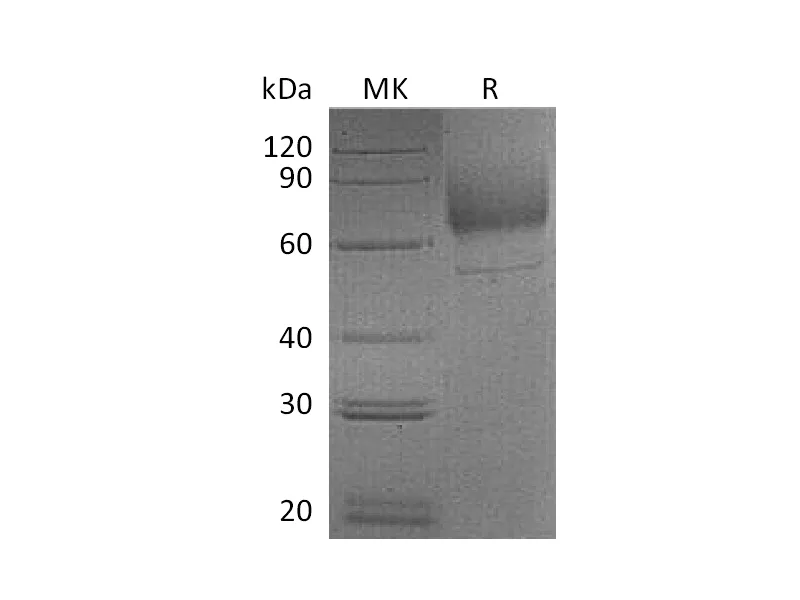
EnkiLife provides the Recombinant Mouse LIMPII (C-6His) protein,aslo know as Lysosome membrane protein 2,85 kDa lysosomal membrane sialoglycoprotein,LGP85,Lysosome membrane protein II,LIMP II,Scavenger receptor class B member 2,Scarb2, which features high purity, high activity, and high stability. It can be applied in scientific research, biopharmaceuticals, and other fields.Purity:Greater than 95% as determined by reducing SDS-PAGE;Endotoxin Level:<1 EU/µg as determined by LAL test.;Construction:Recombinant Mouse Lysosomal Integral Membrane Protein II is produced by our Mammalian expression system and the target gene encoding Arg27-Thr432 is expressed with a 6His tag at the C-terminus.Accession:O35114. Expression Host:Human Cells.Species:Mouse.Predicted Molecular Mass:47.1 KDa. Background:Lysosome membrane protein II (LIMPII),also known as SCARB2, is a type III multi-pass membrane glycoprotein that is located primarily in limiting membranes of lysosomes and endosomes on all tissues and cell types so far examined. Earlier studies in mice and rat suggested that this protein may participate in membrane transportation and the reorganization of endosomal/lysosomal compartment. The protein deficiency in mice was reported to impair cell membrane transport processes and cause pelvic junction obstruction, deafness, and peripheral neuropathy. Further studies in human showed that this protein is identified as a receptor for EV71 (human enterovirus species A, Enterovirus 71) and CVA16 (coxsackievirus A16) which are most frequently associated with hand, foot and mouth disease (HFMD). Mutations in this gene caused an autosomal recessive progressive myoclonic epilepsy-4 (EPM4), also known as action myoclonus-renal failure syndrome (AMRF). Alternatively spliced transcript variants encoding different isoforms have been found for this gene. In addition, LIMPII also has been shown to bind thrombospondin-1, may contribute to the pro-adhesive changes of activated platelets during coagulation, and inflammation.
More from EnkiLife