Recombinant Mouse NKG2D (N-6His)
PHM2166-10ug · 10ug
Verified Partner
Sign in to see pricing and request a quote.
Brand Store Product
No external links. Get your quote directly here.

Description
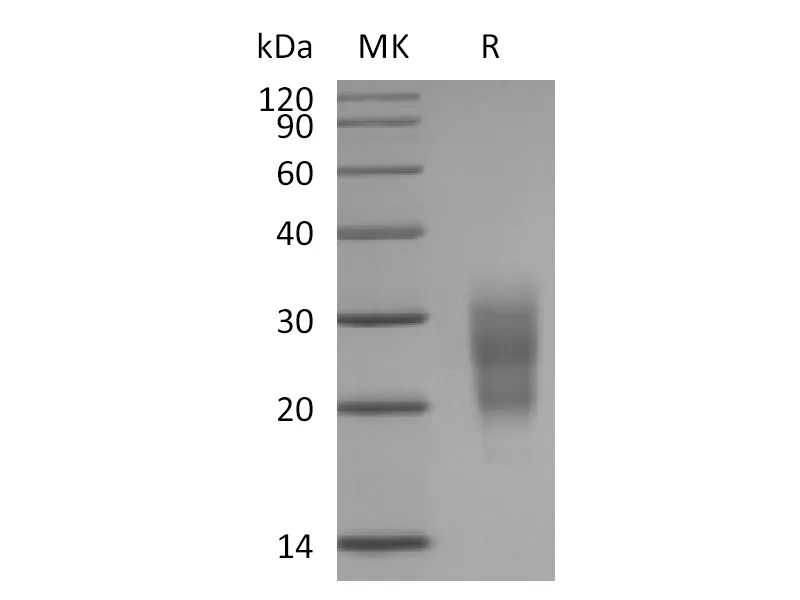
EnkiLife provides the Recombinant Mouse NKG2D (N-6His) protein,aslo know as CD314,KLRK1,CD314 antigen;Killer cell lectin-like receptor subfamily K member 1,killer cell lectin-like receptor subfamily K,member 1,KLR,NK cell receptor D,NKG2-D,NKG2-D type II integral membrane protein,NKG2-D-activating NK receptor, which features high purity, high activity, and high stability. It can be applied in scientific research, biopharmaceuticals, and other fields.Purity:Greater than 95% as determined by reducing SDS-PAGE;Endotoxin Level:<1 EU/µg as determined by LAL test.;Construction:Recombinant Mouse NKG2-D type II Integral Membrane Protein is produced by our Mammalian expression system and the target gene encoding Phe94 - Val232 is expressed with a 6His tag at the N-terminus.Accession:O54709. Expression Host:Human Cells.Species:Mouse.Predicted Molecular Mass:16.7 KDa. Background:NKG2-D type II integral membrane protein (NKG2D) is a type II transmembrane glycoprotein which belongs to the CD94/NKG2 family. NKG2D is expressed on natural killer (NK) cells, CD8+ alpha-beta and gamma-delta T-cells. As an activating and costimulatory receptor, it involved in immunosurveillance upon binding to various cellular stress-inducible ligands displayed at the surface of autologous tumor cells and virus-infected cells. It provides both stimulatory and costimulatory innate immune responses on activated killer (NK) cells, leading to cytotoxic activity. It stimulates perforin-mediated elimination of ligand-expressing tumor cells. Signaling involves calcium influx, culminating in the expression of TNF-alpha. NKG2D participates in NK cell-mediated bone marrow graft rejection and survival of NK cells. It Binds to ligands belonging to various subfamilies of MHC class I-related glycoproteins including MICA, MICB, RAET1E, RAET1G, ULBP1, ULBP2, ULBP3 (ULBP2//u003EULBP1//u003EULBP3) and ULBP4.
More from EnkiLife