Recombinant Mouse S100B (C-6His)
PEM1451-50ug · 50ug
Verified Partner
Sign in to see pricing and request a quote.
Brand Store Product
No external links. Get your quote directly here.

Description
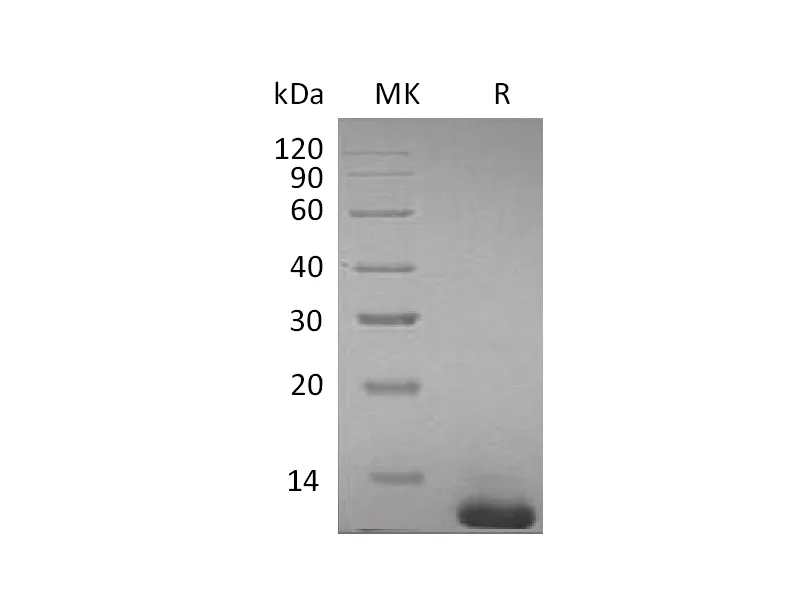
EnkiLife provides the Recombinant Mouse S100B (C-6His) protein,aslo know as Protein S100-B,S-100 protein beta chain,S-100 protein subunit beta,S100 calcium-binding protein B,S100b,S100 beta,S100 calcium binding protein B, which features high purity, high activity, and high stability. It can be applied in scientific research, biopharmaceuticals, and other fields.Purity:Greater than 95% as determined by reducing SDS-PAGE;Endotoxin Level:<1 EU/µg as determined by LAL test.;Construction:Recombinant Mouse S100 Calcium Binding Protein B is produced by our E.coli expression system and the target gene encoding Met1-Glu92 is expressed with a 6His tag at the C-terminus.Accession:P50114. Expression Host:E.coli.Species:Mouse.Predicted Molecular Mass:11.8 KDa. Background:S100-B, is an acidic protein with a molecular weight of 21 kDa belonging to the S100 family. S100-B contains two EF-hand-type calcium-binding motifs separated by a hinge region with a hydrophobic cleft. S100-B plays an important role in neurodevelopment, differentiation, and brain construction. S100-B has neuroprotective effects, but at high concentrations S100-B is neurotoxic. Extracellular concentration of S100-B increases following brain damage, which easily penetrates into cerebrospinal fluid in brain damage and then into the blood. S100-B is expressed and produced by astrocytes in vertebrate brains and in the CNS, and the astrocytes are the major cells producing S100-B protein in gray matter, as well as oligodendrocytes are the predominant S100-B in protein producing cells in white matter. The major advantage of using S100-B is that elevations in serum or CSF levels provide a sensitive measure for determining CNS injury at the molecular level before gross changes develop, enabling timely delivery of crucial medical intervention before irreversible damage occurs. In addition, S100-B, which is also present in Mouse melanocytes, is a reliable marker for melanoma malignancy both in bioptic tissue and in serum.
More from EnkiLife