Recombinant Mouse TIM-3 (C-6His)
PHM1651-50ug · 50ug
Verified Partner
Sign in to see pricing and request a quote.
Brand Store Product
No external links. Get your quote directly here.

Description
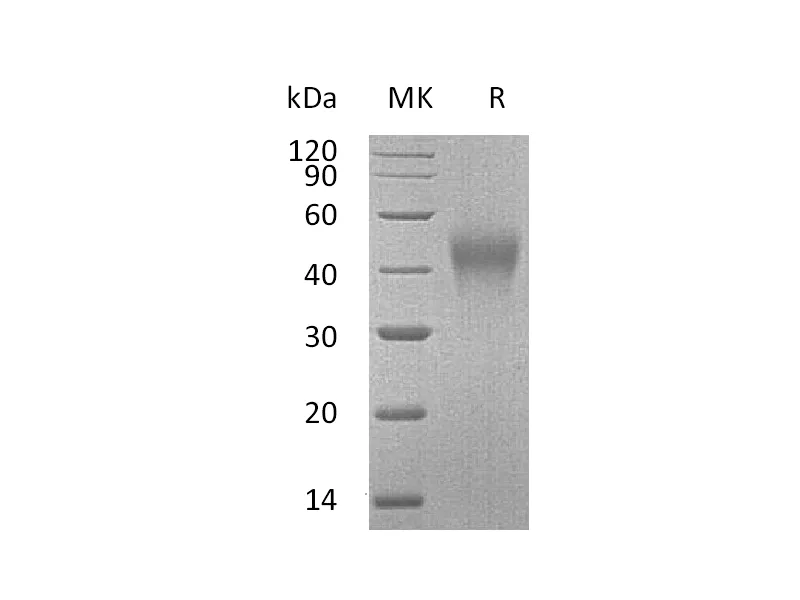
EnkiLife provides the Recombinant Mouse TIM-3 (C-6His) protein,aslo know as Hepatitis A virus cellular receptor 2 homolog,HAVcr-2,T-cell immunoglobulin and mucin domain-containing protein 3,T-cell immunoglobulin mucin receptor 3,T-cell membrane protein 3,Tim3,Timd3, which features high purity, high activity, and high stability. It can be applied in scientific research, biopharmaceuticals, and other fields.Purity:Greater than 95% as determined by reducing SDS-PAGE;Endotoxin Level:<1 EU/µg as determined by LAL test.;Construction:Recombinant Mouse T Cell Immunoglobulin And Mucin Domain-3 is produced by our Mammalian expression system and the target gene encoding Arg20-Ala193 is expressed with a 6His tag at the C-terminus.Accession:Q8VIM0. Expression Host:Human Cells.Species:Mouse.Predicted Molecular Mass:20.12 KDa. Background:T cell immunoglobulin and mucin domain-3 (TIM3), also called hepatitis A virus cellular receptor 2 (HAVCR2), is a transmembrane glycoprotein of the TIM family of immune regulating molecules and plays an important role in the Th1-mediated immune response. TIM3 is expressed on the Th1 cells, CD8 T-cells, monocytes, and dendritic cells, but not on Th2 cells. TIM3 expressed by monocytes and dendritic cells facilitates phagocytosis of apoptotic cells and up-regulates cross-presentation of apoptotic cell-associated antigens through interaction with phosphatidylserine. Engagement of TIM3 by its ligand galectin-9 induces a range of immunosuppressive functions which enhance immune tolerance and inhibit anti-tumor immunity. Stimulation of TIM3 with an agonistic antibody promotes inflammation through the activation of innate immune cells. TIM3 is also regarded as a potential target molecule for immunotherapy. TIM3 and programmed cell death 1 (PD-1) as two important coinhibitory regulators of T cell responses, have been implicated with the T-cell dysfunction or exhaustion associated with chronic HBV infection including HBV-related HCC.
More from EnkiLife