SDHB Rabbit Polyclonal Antibody
APRab17680-20μL · 20μL
Verified Partner
Sign in to see pricing and request a quote.
Brand Store Product
No external links. Get your quote directly here.

Description
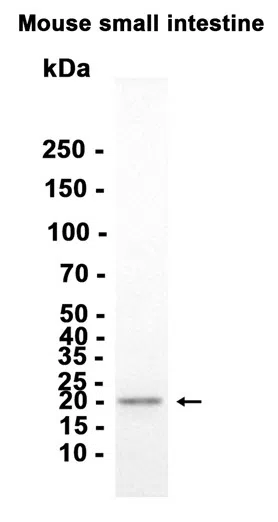
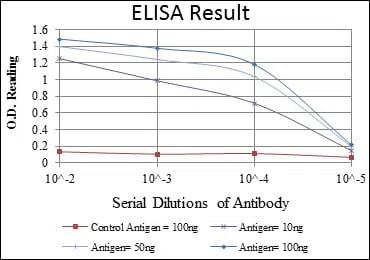
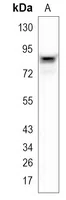
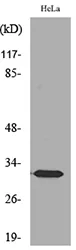
EnkiLife offers the SDHB Rabbit Polyclonal Antibody. This antibody reacts with Human,Mouse,Rat,Fish species and is suitable for WB,IHC,ICC/IF,ELISA application. Alternative Names of Immunogen: SDHB; SDH; SDH1; Succinate dehydrogenase [ubiquinone] iron-sulfur subunit, mitochondrial; Iron-sulfur subunit of complex II; Ip. The product boasts remarkable high specificity, outstanding reproducibility, and exceptional affinity, making it a reliable and superior choice for your needs. Dilution Ratio: WB 1:500-1:2000,IHC 1:100-1:300,ICC/IF 1:50-1:200,ELISA 1:10000-1:20000 Background: Complex II of the respiratory chain, which is specifically involved in the oxidation of succinate, carries electrons from FADH to CoQ. The complex is composed of four nuclear-encoded subunits and is localized in the mitochondrial inner membrane. The iron-sulfur subunit is highly conserved and contains three cysteine-rich clusters which may comprise the iron-sulfur centers of the enzyme. Sporadic and familial mutations in this gene result in paragangliomas and pheochromocytoma, and support a link between mitochondrial dysfunction and tumorigenesis. [provided by RefSeq, Jul 2008],catalytic activity:Succinate + ubiquinone = fumarate + ubiquinol.,cofactor:Binds 1 2Fe-2S cluster.,cofactor:Binds 1 3Fe-4S cluster.,cofactor:Binds 1 4Fe-4S cluster.,disease:Defects in SDHB are a cause of Cowden-like syndrome [MIM:612359]. Cowden-like syndrome is a cancer predisposition syndrome associated with elevated risk for tumors of the breast, thyroid, kidney and uterus.,disease:Defects in SDHB are a cause of paraganglioma and gastric stromal sarcoma [MIM:606864]; also called Carney-Stratakis syndrome. Gastrointestinal stromal tumors may be sporadic or inherited in an autosomal dominant manner, alone or as a component of a syndrome associated with other tumors, such as in the context of neurofibromatosis type 1 (NF1). Patients have both gastrointestinal stromal tumors and paragangliomas. Susceptibility to the tumors was inherited in an apparently autosomal dominant manner, with incomplete penetrance.,disease:Defects in SDHB are a cause of pheochromocytoma [MIM:171300]. The pheochromocytomas are catecholamine-producing, chromaffin tumors that arise in the adrenal medulla in 90% of cases. In the remaining 10% of cases, they develop in extra-adrenal sympathetic ganglia and may be referred to as "paraganglioma." Pheochromocytoma usually presents with hypertension. Approximately 10% of pheochromocytoma is hereditary. Although pheochromocytoma susceptibility may be associated with germline mutations in the tumor-suppressor genes VHL and NF1 and in the proto-oncogene RET, the genetic basis for most cases of non-syndromic familial pheochromocytoma is unknown.,disease:Defects in SDHB are the cause of hereditary paragangliomas type 4 (PLG4) [MIM:115310]; also known as familial non-chromaffin paragangliomas type 4. Paragangliomas refer to rare and mostly benign tumors that arise from any component of the neuroendocrine system. PLG4 is characterized by the development of mostly benign, highly vascular, slow growing tumors in the head and neck. In the head and neck region, the carotid body is the largest of all paraganglia and is also the most common site of the tumors.,function:Iron-sulfur protein (IP) subunit of succinate dehydrogenase (SDH) that is involved in complex II of the mitochondrial electron transport chain and is responsible for transferring electrons from succinate to ubiquinone (coenzyme Q).,pathway:Carbohydrate metabolism; tricarboxylic acid cycle.,similarity:Belongs to the succinate dehydrogenase/fumarate reductase iron-sulfur protein family.,similarity:Contains 1 2Fe-2S ferredoxin-type domain.,similarity:Contains 1 4Fe-4S ferredoxin-type domain.,subunit:Component of complex II composed of four subunits: the flavoprotein (FP) sdha, iron-sulfur protein (IP) sdhb, and a cytochrome b560 composed of sdhc and sdhd., Research Area: Citrate cycle (TCA cycle);Oxidative phosphorylation;Alzheimer's disease;Parkinson's disease;Huntington's disease;
More from EnkiLife