Tcl1 Rabbit Polyclonal Antibody
APRab18741-100μL · 100μL
Verified Partner
Sign in to see pricing and request a quote.
Brand Store Product
No external links. Get your quote directly here.

Description
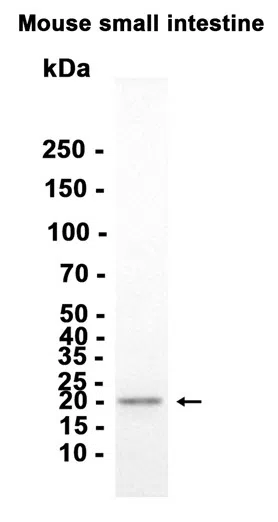
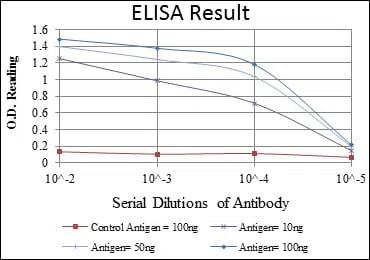
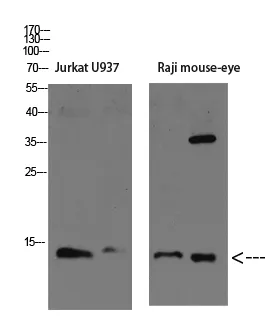
EnkiLife offers the Tcl1 Rabbit Polyclonal Antibody. This antibody reacts with Human,Rat,Mouse species and is suitable for WB,ELISA application. Alternative Names of Immunogen: T-cell leukemia/lymphoma protein 1A (Oncogene TCL-1) (Oncogene TCL1) (Protein p14 TCL1). The product boasts remarkable high specificity, outstanding reproducibility, and exceptional affinity, making it a reliable and superior choice for your needs. Dilution Ratio: WB 1:500-1:2000,ELISA 1:10000-1:20000 Background: Overexpression of the TCL1 gene in humans has been implicated in the development of mature T cell leukemia, in which chromosomal rearrangements bring the TCL1 gene in close proximity to the T-cell antigen receptor (TCR)-alpha (MIM 186880) or TCR-beta (MIM 186930) regulatory elements (summarized by Virgilio et al., 1998 [PubMed 9520462]). In normal T cells TCL1 is expressed in CD4-/CD8- cells, but not in cells at later stages of differentiation. TCL1 functions as a coactivator of the cell survival kinase AKT (MIM 164730) (Laine et al., 2000 [PubMed 10983986]).[supplied by OMIM, Jul 2010],disease:Chromosomal aberrations activating TCL1A are found in chronic T-cell leukemias (T-CLL). Translocation t(14;14)(q11;q32); translocation t(7;14)(q35;q32); inversion inv(14)(q11;q32) that involves the T-cell receptor alpha/delta locuses.,function:Enhances the phosphorylation and activation of AKT1, AKT2 and AKT3. Promotes nuclear translocation of AKT1. Enhances cell proliferation, stabilizes mitochondrial membrane potential and promotes cell survival.,similarity:Belongs to the TCL1 family.,subcellular location:Microsomal fraction.,subunit:Homodimer. Interacts with AKT1, AKT2 and AKT3 (via PH domain). Interacts with PNPT1; the interaction has no effect on PNPT1 exonuclease activity.,tissue specificity:Restricted in the T-cell lineage to immature thymocytes and activated peripheral lymphocytes. Preferentially expressed early in T- and B-lymphocyte differentiation.,
More from EnkiLife