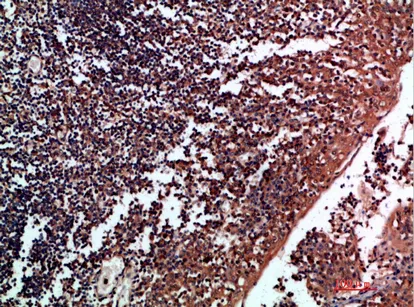
Tenascin-R Rabbit Polyclonal Antibody
APRab18790-20μL · 20μL
Verified Partner
Sign in to see pricing and request a quote.
Brand Store Product
No external links. Get your quote directly here.

Description
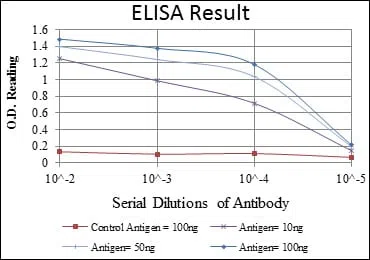
EnkiLife offers the Tenascin-R Rabbit Polyclonal Antibody. This antibody reacts with Human,Mouse,Rat species and is suitable for IHC,ICC/IF,ELISA application. Alternative Names of Immunogen: Tenascin-R (TN-R;Janusin;Restrictin). The product boasts remarkable high specificity, outstanding reproducibility, and exceptional affinity, making it a reliable and superior choice for your needs. Dilution Ratio: IHC 1:50-1:200,ICC/IF 1:50-1:200,ELISA 1:10000-1:20000 Background: tenascin R(TNR) Homo sapiens This gene encodes a member of the tenascin family of extracellular matrix glycoproteins. The encoded protein is restricted to the central nervous system. The protein may play a role in neurite outgrowth, neural cell adhesion and modulation of sodium channel function. It is a constituent of perineuronal nets. [provided by RefSeq, Aug 2013],domain:The EGF-like domains mediate interaction with CNTN1. The fibronectin type-III domains 3-5 mediate interaction with BCAN. The fibronectin type-III domains 1-2 and 7-9 mediate interaction with SCN2B.,function:Neural extracellular matrix (ECM) protein involved in interactions with different cells and matrix components. These interactions can influence cellular behavior by either evoking a stable adhesion and differentiation, or repulsion and inhibition of neurite growth. Binding to cell surface gangliosides inhibits RGD-dependent integrin-mediated cell adhesion and results in an inhibition of PTK2 (FAK) phosphorylation and cell detachment. Binding to membrane surface sulfatides results in a oligodendrocyte adhesion and differentiation. Interaction with CNTN1 induces a repulsion of neurons and an inhibition of neurite outgrowth. Interacts with SCN2B may play a crucial role in clustering and regulation of activity of sodium channels at nodes of Ranvier. TNR-linked chondroitin sulfate glycosaminoglycans are involved in the interaction with FN1 and mediate inhibition of cell adhesion and neurite outgrowth. The highly regulated addition of sulfated carbohydrate structure may modulate the adhesive properties of TNR over the course of development and during synapse maintenance.,PTM:Contains N-linked oligosaccharides, O-linked sialylated structures and O-linked chondroitin sulfate glycosaminoglycans. Contains N-linked oligosaccharides with a sulfated carbohydrate structure.,similarity:Belongs to the tenascin family.,similarity:Contains 1 fibrinogen C-terminal domain.,similarity:Contains 5 EGF-like domains.,similarity:Contains 9 fibronectin type-III domains.,subunit:Forms oligomers. Interacts with CNTN1, TNC, and FN1. Interacts with BCAN and AGC1 in a calcium-dependent manner. Interacts with SCN2B, PTPRZ1, and CSPG3.,tissue specificity:Brain specific., Research Area: Focal adhesion;ECM-receptor interaction;
More from EnkiLife