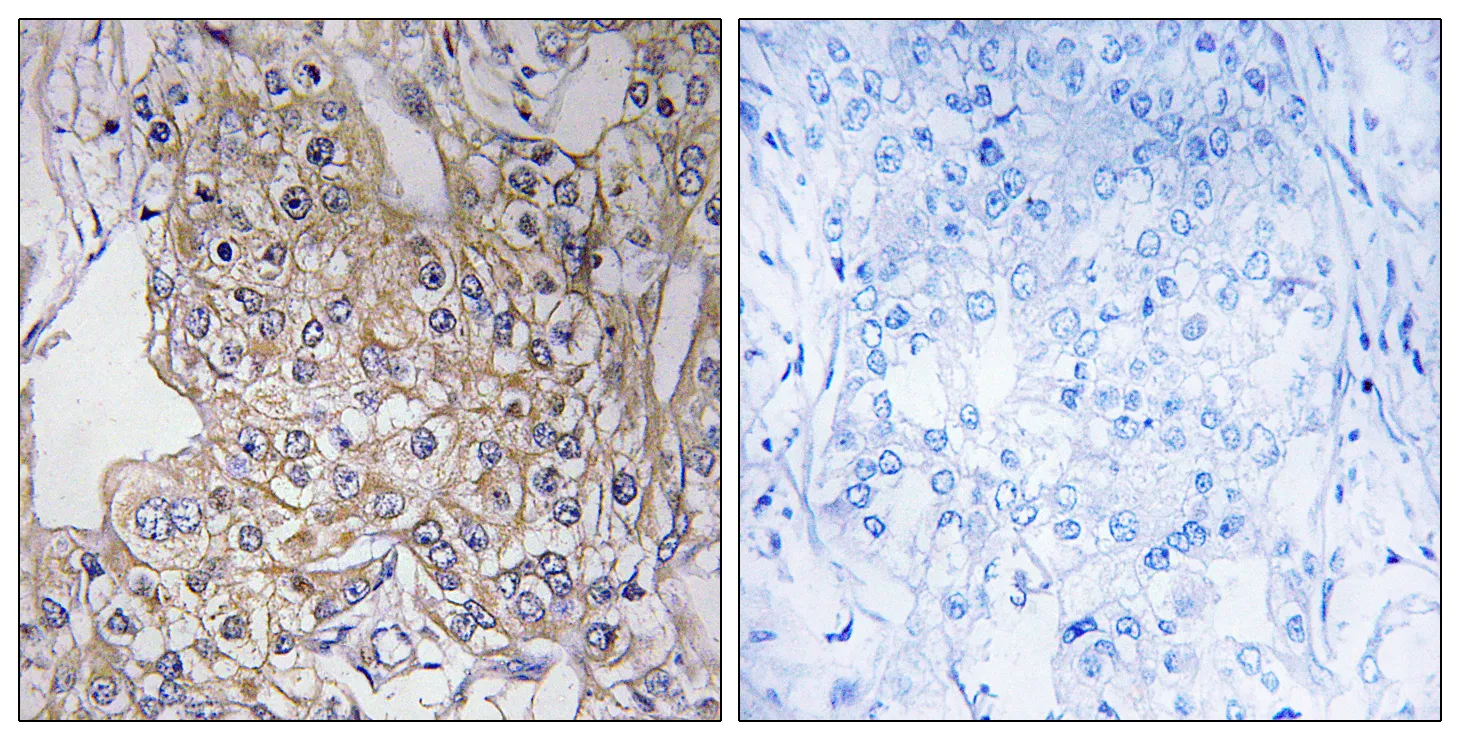
Tenascin-X Rabbit Polyclonal Antibody
APRab18791-20μL · 20μL
Verified Partner
Sign in to see pricing and request a quote.
Brand Store Product
No external links. Get your quote directly here.

Description
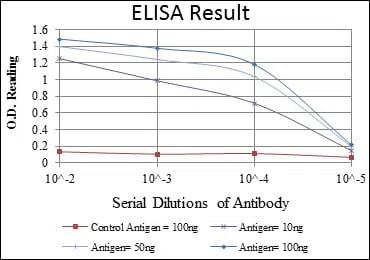
EnkiLife offers the Tenascin-X Rabbit Polyclonal Antibody. This antibody reacts with Human,Rat,Mouse species and is suitable for IHC,ICC/IF,ELISA application. Alternative Names of Immunogen: TNXB; HXBL; TNX; TNXB1; TNXB2; XB; Tenascin-X; TN-X; Hexabrachion-like protein. The product boasts remarkable high specificity, outstanding reproducibility, and exceptional affinity, making it a reliable and superior choice for your needs. Dilution Ratio: IHC 1:100-1:300,ICC/IF 1:50-1:200,ELISA 1:5000-1:20000 Background: This gene encodes a member of the tenascin family of extracellular matrix glycoproteins. The tenascins have anti-adhesive effects, as opposed to fibronectin which is adhesive. This protein is thought to function in matrix maturation during wound healing, and its deficiency has been associated with the connective tissue disorder Ehlers-Danlos syndrome. This gene localizes to the major histocompatibility complex (MHC) class III region on chromosome 6. It is one of four genes in this cluster which have been duplicated. The duplicated copy of this gene is incomplete and is a pseudogene which is transcribed but does not encode a protein. The structure of this gene is unusual in that it overlaps the CREBL1 and CYP21A2 genes at its 5' and 3' ends, respectively. Multiple transcript variants encoding different isoforms have been found for this gene. [provided by RefSeq, Jul 2008],alternative products:Additional isoforms seem to exist,caution:Could be the product of a pseudogene. TNXA is transcriptionally active in adrenal cortex but no protein product has been observed.,caution:There are two genes for TN-X: TNXA and TNXB. TNXA is a partial gene which can sometimes recombine with TNXB.,developmental stage:Expression levels are lower in adults than in children.,disease:Association with congenital adrenal hyperplasia.,disease:Defects in TNXB are the cause of tenascin-X deficiency (TNXD) [MIM:606408]. TNXD leads to an Ehlers-Danlos-like syndrome characterized by hyperextensible skin, hypermobile joints, and tissue fragility. Tenascin-X-deficient patients, however, lack atrophic scars, a major diagnostic criteria for classic Ehlers-Danlos. Delayed wound healing, which is also common in classic EDS, is only present in a subset of patients.,function:Appears to mediate interactions between cells and the extracellular matrix. Substrate-adhesion molecule that appears to inhibit cell migration. Accelerates collagen fibril formation. May play a role in supporting the growth of epithelial tumors.,miscellaneous:TNX genes are located in the class III HLA region within a complex locus, named RCCX module, containing genes for RP1/STK19, C4B, CYP21B/CYP21A2 and TNXB. Most chromosomes bear 2 modules, but monomodular and trimodular haplotypes are common in most populations. The bimodular haplotype results from the duplication of the RCCX module, leading to a duplicate containing RP2/RP1 pseudogene, C4A, CYP21A/CYP21A1P and TNXA. TNXA is a duplicated section of TNXB and probably consists in a truncated pseudogene: it contains a 120 bp deletion causing a frameshift and a premature stop codon that probably render the gene non-functional. In some pathologies, an unequal crossover between monomodular and bimodular RCCX results in a chromosome with a TNXB-TNXA hybrid gene, arising from a fusion between the TNXB gene of a monomodular RCCX and the TNXA gene of a bimodular RCCX. The TNXB-TNXA hybrid may corresponds to TNXB-Short gene and may produce a functional protein.,similarity:Belongs to the tenascin family.,similarity:Contains 1 fibrinogen C-terminal domain.,similarity:Contains 19 EGF-like domains.,similarity:Contains 3 fibronectin type-III domains.,similarity:Contains 32 fibronectin type-III domains.,subunit:Homotrimer. Interacts with type I, III and V collagens and tropoelastin via its 29th fibronectin type-III domain.,tissue specificity:Expressed in the adrenal gland.,tissue specificity:Highly expressed in fetal adrenal, in fetal testis, fetal smooth, striated and cardiac muscle. Isoform XB-short is only expressed in the adrenal gland., Research Area: Focal adhesion;ECM-receptor interaction;
More from EnkiLife