UBA1 Rabbit Polyclonal Antibody
APRab19503-20μL · 20μL
Verified Partner
Sign in to see pricing and request a quote.
Brand Store Product
No external links. Get your quote directly here.

Description
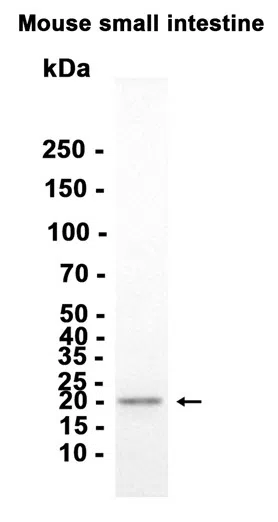
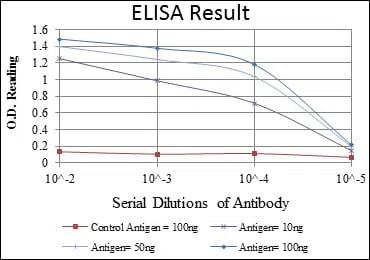
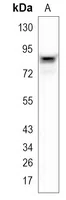
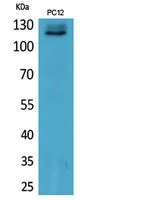
EnkiLife offers the UBA1 Rabbit Polyclonal Antibody. This antibody reacts with Human,Mouse,Rat species and is suitable for WB,ELISA application. Alternative Names of Immunogen: UBA1; A1S9T; UBE1; Ubiquitin-like modifier-activating enzyme 1; Protein A1S9; Ubiquitin-activating enzyme E1. The product boasts remarkable high specificity, outstanding reproducibility, and exceptional affinity, making it a reliable and superior choice for your needs. Dilution Ratio: WB 1:500-1:2000,ELISA 1:10000-1:20000 Background: The protein encoded by this gene catalyzes the first step in ubiquitin conjugation to mark cellular proteins for degradation. This gene complements an X-linked mouse temperature-sensitive defect in DNA synthesis, and thus may function in DNA repair. It is part of a gene cluster on chromosome Xp11.23. Alternatively spliced transcript variants that encode the same protein have been described. [provided by RefSeq, Jul 2008],disease:Defects in UBA1 are the cause of spinal muscular atrophy X-linked type 2 (SMAX2) [MIM:301830]; also known as X-linked lethal infantile spinal muscular atrophy, distal X-linked arthrogryposis multiplex congenita or X-linked arthrogryposis type 1 (AMCX1). Spinal muscular atrophy refers to a group of neuromuscular disorders characterized by degeneration of the anterior horn cells of the spinal cord, leading to symmetrical muscle weakness and atrophy. SMAX2 is a lethal infantile form presenting with hypotonia, areflexia, and multiple congenital contractures.,function:Activates ubiquitin by first adenylating its C-terminal glycine residue with ATP, and thereafter linking this residue to the side chain of a cysteine residue in E1, yielding an ubiquitin-E1 thioester and free AMP.,miscellaneous:There are two active sites within the E1 molecule, allowing it to accommodate two ubiquitin moieties at a time, with a new ubiquitin forming an adenylate intermediate as the previous one is transferred to the thiol site.,pathway:Protein modification; protein ubiquitination.,similarity:Belongs to the ubiquitin-activating E1 family.,subunit:Monomer (By similarity). Interacts with GAN (via BTB domain)., Research Area: Ubiquitin mediated proteolysis;Parkinson's disease;
More from EnkiLife