WISP-3 Rabbit Polyclonal Antibody
APRab19906-20μL · 20μL
Verified Partner
Sign in to see pricing and request a quote.
Brand Store Product
No external links. Get your quote directly here.

Description
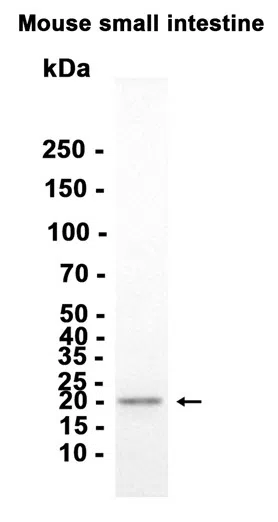
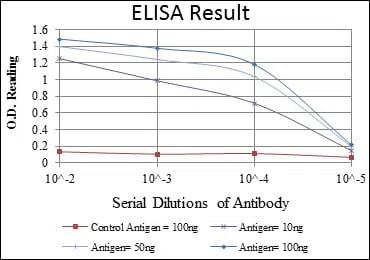
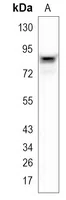
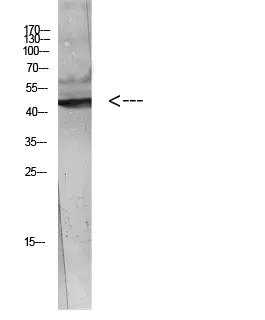
EnkiLife offers the WISP-3 Rabbit Polyclonal Antibody. This antibody reacts with Human,Rat,Mouse species and is suitable for WB,ELISA application. Alternative Names of Immunogen: WNT1-inducible-signaling pathway protein 3 (WISP-3) (CCN family member 6). The product boasts remarkable high specificity, outstanding reproducibility, and exceptional affinity, making it a reliable and superior choice for your needs. Dilution Ratio: WB 1:500-1:2000,ELISA 1:10000-1:20000 Background: This gene encodes a member of the WNT1 inducible signaling pathway (WISP) protein subfamily, which belongs to the connective tissue growth factor (CTGF) family. WNT1 is a member of a family of cysteine-rich, glycosylated signaling proteins that mediate diverse developmental processes. The CTGF family members are characterized by four conserved cysteine-rich domains: insulin-like growth factor-binding domain, von Willebrand factor type C module, thrombospondin domain and C-terminal cystine knot-like domain. This gene is overexpressed in colon tumors. It may be downstream in the WNT1 signaling pathway that is relevant to malignant transformation. Mutations of this gene are associated with progressive pseudorheumatoid dysplasia, an autosomal recessive skeletal disorder, indicating that the gene is essential for normal postnatal skeletal growth and cartilage homeostasis. Multipledisease:Defects in WISP3 are the cause of progressive pseudorheumatoid arthropathy of childhood (PPAC) [MIM:208230]. PPAC is an autosomal recessive disorder characterized by stiffness and swelling of joints, motor weakness and joint contractures. Signs and symptoms of the disease develop typically between three and eight years of age. This progressive disease is a primary disorder of articular cartilage with continued cartilage loss and destructive bone changes with aging.,function:Appears to be required for normal postnatal skeletal growth and cartilage homeostasis.,similarity:Belongs to the CCN family.,similarity:Contains 1 CTCK (C-terminal cystine knot-like) domain.,similarity:Contains 1 IGFBP N-terminal domain.,similarity:Contains 1 TSP type-1 domain.,tissue specificity:Predominant expression in adult kidney and testis and fetal kidney. Weaker expression found in placenta, ovary, prostate and small intestine. Also expressed in skeletally-derived cells such as synoviocytes and articular cartilage chondrocytes.,
More from EnkiLife